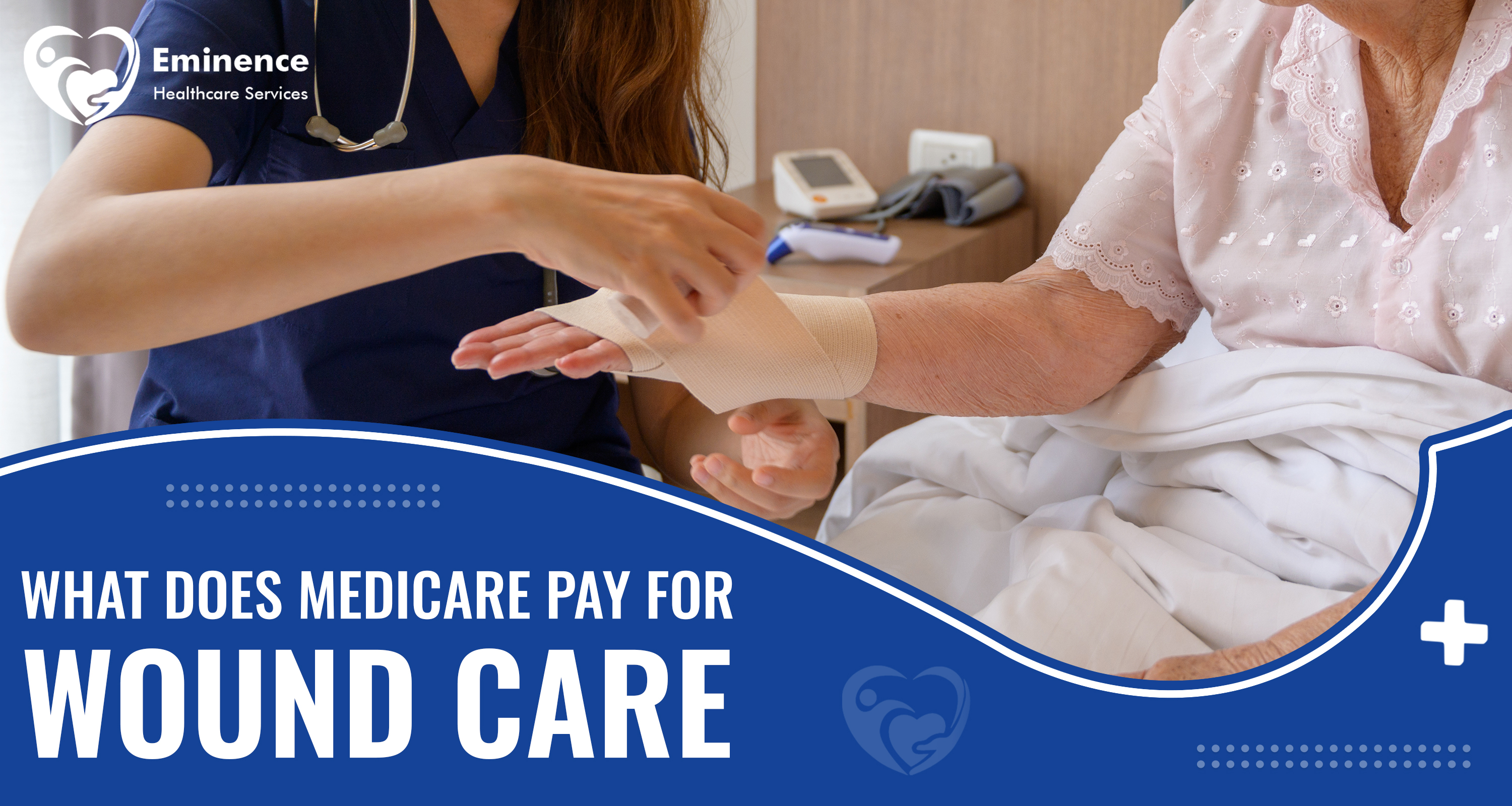
The range of wound care begins with something as minor as applying ointment and extends as far as treating chronic wounds, ulcers, post-surgical wounds, and more. Anyway, proper reimbursement is an important part of rendering wound care services.
Especially with Medicare, successful medical billing depends highly on insurance coverage. Not all wounds are covered under Medicare; there are different coverage rules for inpatient care, outpatient care, home health, and Skilled Nursing Facility (SNF).
Plus, there are documentation challenges, coding issues, risk of denials, and more. All this highlights the need for wound care specialists to understand what services are covered by Medicare. This helps them take care of billing steps and perform accurate billing for streamlined revenue cycle management.
Read on this blog to improve your administrative process as a wound care specialist and earn revenue via Medicare without any hassle.
Understanding How Medicare Covers Wound Care
There are five major categories in Medicare that cover wound care. These categories include Medicare Part A, Part B, Home Health, Outpatient, and SNFs. The coverage rules change with every categorization. Knowing about these prepares healthcare providers to avoid errors and maximize revenue.
Let’s look at these categories one by one:
Medicare Part A
This covers hospital stays and medical care in skilled nursing facilities. So, if a patient stays in hospital for wound care like surgery, then insurance coverage will come under Part A.
Medicare Part B
Part B of Medicare insurance coverage includes outpatient visits for wound care. For example, if a patient goes to a clinic for wound care like cleaning, dressing, or checkups, it is covered under Part B.
Home Health
As the name suggests, home health covers skilled medical care at home for patients who cannot visit a medical facility. So, if a nurse visits a patient at their home for wound care like dressing or checking recovery, then it will be a part of home health.
Outpatient
When a patient receives wound care at a medical facility like a clinic or a hospital, but they don’t need to stay overnight at the facility, it is a part of outpatient coverage. Outpatient coverage includes care, such as minor procedures, wound assessment, or therapy.
Skilled Nursing Facilities (SNFs)
When a patient receives long-term wound care, such as daily nursing or therapy, but not at the hospital, then it is covered under Skilled Nursing Facilities (SNFs). This covers long-term wound care.
Knowing these categories is crucial for better medical claims management. Because the billing rules are different for every category, and they make the billing process complex, it leads to mistakes. Wound care billing services help healthcare providers work with these complexities and achieve maximum revenue.
Types of Wounds Typically Covered
There are certain wounds that are usually a part of Medicare, and they are chronic wounds such as:
- Diabetic foot ulcers
- Pressure sores (bedsores)
- Venous or arterial ulcers
Other than chronic wounds, acute or post-surgical wounds that happen after an injury or surgery are also a part of the Medicare insurance coverage.
Wound Care Services Covered by Medicare
Until now, we discussed the type of wound care and categories for insurance coverage. Let’s learn about specific wound care services covered by Medicare.
- Examination and assessment of wounds
- Another wound care service is debridement
- Applying and changing dressings
- Advanced therapies like Negative Pressure Wound Therapy (wound vacs)
- Skin grafts or substitutes, infection treatment, and follow-up care
In terms of medical billing services, healthcare providers must include all these services in their billing claims so that they can earn their deserved revenue. This is important knowledge for wound care specialists to keep their administrative flow consistent.
Documentation Requirements for Medicare Wound Care
Another important part of Medicare wound care is recording all the treatment-related details precisely. Accurate documentation results in a higher clean claims rate and revenue maximization.
Following are the details you must include in the documents to get reimbursed:
- Wound size, depth, and stage
- Notes showing whether the wound is healing
- Treatment plans and doctor’s orders
- Photos of the wound if needed
If you want to ensure that your billing process stays smooth, then you must work on keeping the documentation free from mistakes and missing details.
Coding Requirements for Medicare Wound Care
There is no question that coding needs to be perfect to prevent claim denials. It is also the step where the scope of making mistakes is higher.
For wound care, ICD-10 codes, CPT codes, HCPCS codes, and modifiers are a part of the process.
- ICD-10 codes are for wound diagnosis.
- CPT codes are for procedures like debridement or dressing changes.
- HCPCS codes are for suppliers and medical devices.
- There are also modifiers and bundling rules that need attention.
Ensuring accuracy in coding is complex, but medical billing services in Los Angeles can provide medical billing expertise and professional services to prevent coding mistakes.
Common Billing Mistakes that Lead to Revenue Loss
When it comes to wound care billing, there are more common mistakes than big issues. A little awareness and attention to detail can make the process smoother and increase collections.
Take care of the below-mentioned common billing mistakes that might be keeping your practice behind:
- Filing claims for wound care services that Medicare doesn’t cover
- Improper coding with mistakes during claim filing
- Missing information and inaccurate data during documentation
- Limited understanding of Local Coverage Determination (LCDs)
- Inefficient handling of denials and revenue recovery
- Limited knowledge regarding Part A and Part B rules of Medicare coverage
Though these mistakes are very common, wound care billing services prevent such errors without any trouble.
How to Improve Wound Care Billing and Maximize Revenue
A simple answer to this would be to solve the common problems in your medical billing process and achieve adequate revenue. But this is a very general answer.
A better answer would be to hire a medical billing partner who has the experience and knowledge to solve problems and improve your operational flow.
- Medical billing companies ensure they do the billing process properly to make reimbursement better and more uplifted.
- They ensure that the claims are approved faster by maintaining accuracy during billing steps.
- They ensure that there are fewer denials, the cash flow is better, all compliance rules are followed, and overall there is less administrative workload.
Partner with Eminence RCM for Wound Care Billing
Eminence RCM offers wound care billing services to healthcare providers and practices across the US. We know that Medicare wound care billing is one of the most complex specialties. That is why we have prepared a team that is qualified and competent at solving administrative issues and helping you acquire RCM success.
Our medical billing team ensures that your practice meets compliance, leads to fewer denials, and achieves maximum reimbursement. Other than that, we value consistent support, clear communication, and full transparency throughout our partnership.
Your wound care practice needs a team like ours so that you can handle everything effortlessly.
We are ready to support you! Switch to Eminence RCM for wound care billing services and lead to sustainable revenue growth today!
Frequently Asked Questions
Most wound care billing services charge a percentage of what they collect, usually somewhere in the mid-single digits. The exact number really depends on how complex the cases are and how much denial work is involved. At Eminence RCM, pricing is discussed case by case, because wound care billing isn’t always as straightforward as other specialties.
For Medicare to pay, the record has to clearly show what the wound looks like, how it’s being treated, and why that treatment is still necessary. Ongoing progress notes matter just as much as the initial visit. Eminence RCM often sees claims denied simply because the chart didn’t tell the full story.
There isn’t a single right answer. Some clinics prefer keeping billing nearby, especially if they have experienced staff. But wound care rules shift, and Medicare expectations don’t always stay simple. That’s where outside support can help. Eminence RCM often works with practices that realized managing everything internally was becoming heavier than expected.
In many cases, it comes down to medical necessity not being clearly demonstrated. If notes don’t explain why treatment continues or how the wound is progressing, insurers hesitate. Eminence RCM spends time reviewing documentation before submission, because once a wound care claim is denied, the appeal process can be slow.
Wound care tends to come with its own patterns, detailed measurements, staged documentation, repeat visits that must be justified carefully. A general billing team may handle it, but small nuances can slip through. Eminence RCM approaches wound care with focused attention, which usually means fewer corrections and less back-and-forth later.
Still have questions?
Contact Us.webp)